Bedding & Sleep Comfort
How Wool Mattress Pads Balance Moisture and Seasonal Comfort
A mattress pad can change the feel of a bed without changing the mattress underneath. Wool brings a distinctive combination to that extra layer: cushioning, moisture handling and a temperature response that may feel comfortable in more than one season. The details matter, though. Fill, cover, fit and care all influence how a wool mattress pad performs in everyday use.
At bedtime, comfort often comes down to small sensations. Is the surface clammy or dry? Does it feel pleasantly cushioned, or does it add more loft than you want? And when the weather swings from cool nights to warm ones, does your bed still feel inviting? A wool mattress pad may help address several of these questions at once, but it is not a magic temperature control or a substitute for a mattress that suits your body.
Wool fibers can take in moisture vapor and release it into the surrounding air, while their naturally crimped structure creates a springy, insulating layer. Together, those characteristics can contribute to a sleep surface that feels less damp and more balanced. The effect depends on the whole construction: a thick wool fill under a tightly woven cover will behave differently from a light layer with a breathable cotton shell.
Understanding those differences makes it easier to decide whether wool belongs on your bed. Here is what to know about moisture management, seasonal comfort, construction, fit and care before choosing a wool mattress pad.
What a wool mattress pad does—and what it doesn’t
A mattress pad is a layer placed over a mattress, usually held in place by a fitted skirt or elastic. Depending on its construction, it may add a modest amount of cushioning, protect the mattress from everyday wear, or change how the sleep surface feels. A wool version uses wool fibers as some or all of its filling, often enclosed in cotton fabric.
Because a pad sits above the mattress, it can influence the first impression of the bed. A loftier fill may feel softer or more yielding; a thinner one may bring a subtle cushion without much change to firmness. It will not reliably correct a mattress that sags, provide the same deep contouring as a thick topper, or resolve pain on its own. Those distinctions are useful: the right layer can fine-tune a bed, but it cannot replace the support of the mattress below it.
Wool’s appeal lies in the character of the fiber, not a promise that every sleeper will feel the same result. People vary in their sensitivity to warmth, humidity and surface texture. Room conditions, pajamas, sheets, mattress materials and personal preferences all play a part.
Why wool can help manage moisture
During sleep, the body releases moisture, including water vapor. What happens next depends on the air around the sleeper and the materials in the bed. Wool can absorb moisture vapor into its fibers and later release it as conditions change. This process may help limit the clammy sensation some people notice when a bed feels humid, though it does not eliminate moisture or replace ventilation.
It is helpful to distinguish moisture handling from waterproof protection. A wool-filled pad is not automatically a waterproof barrier. If the main concern is spills, bedwetting or protecting a mattress from liquid, check the product’s construction and care instructions for explicit information about water resistance. A breathable wool pad may offer a comfortable textile layer, but it should not be assumed to perform like a waterproof protector.
The cover matters, too. A breathable cotton shell can allow air and moisture vapor to move more freely than a dense or coated fabric. That does not mean cotton alone guarantees a cool bed; weave, thickness, quilting and the other layers all contribute. The combination of fill and cover is what gives the pad its overall character.
For a sleeper who often wakes feeling damp, wool may be one feature worth considering alongside bedroom ventilation, bedding weight and sleepwear. If night sweats are persistent, severe or accompanied by other symptoms, it is sensible to discuss them with a qualified healthcare professional rather than relying on bedding changes alone.
A temperature balance for changing seasons
Wool is known for insulation, but insulation does not simply mean “hot.” It can help slow the movement of heat through a layer, which may make a bed feel more even rather than abruptly warm or cool. In a cooler room, a wool pad may add a cozy buffer between the sleeper and mattress. In a warmer room, its moisture-handling qualities and a breathable cover may support a drier, more comfortable surface.
That seasonal usefulness should be understood as a possibility, not a guarantee. Wool cannot lower the room temperature, and a thick, lofty pad may feel too warm for someone who already sleeps hot. A light fill, airy cotton cover and breathable sheets may suit that person better than a dense, heavily quilted construction. Someone who wants extra warmth in winter may prefer a fuller layer, especially in a cool bedroom.
Think of the pad as one part of a sleep environment. The mattress itself, duvet, room temperature, humidity, airflow and clothing all interact. If you are trying to make a bed more comfortable through the year, changing the duvet or sheets seasonally may be just as relevant as changing the pad. The goal is not to find one material that controls every condition, but to create a combination that feels comfortable to you.
Wool can also have a naturally resilient feel. Its crimped fibers may provide gentle loft rather than the slow, enveloping sensation associated with some foams. The amount of cushioning depends on fill weight and quilting, so two pads made with wool can feel quite different. When possible, look for clear details about the pad’s thickness, fill and construction rather than relying on a broad claim such as “all-season comfort.”
The details to check before choosing
Product descriptions can make wool sound simple, but a closer look at construction helps set realistic expectations. These are the practical details worth comparing:
- Fill material: Check whether the filling is wool throughout or blended with other fibers. Look for the stated wool content and, when relevant to your priorities, information about sourcing or certification.
- Fill weight and loft: A thicker, fuller pad can add more cushioning and insulation. A lighter layer may make a subtler change to the bed. Compare measurements and specifications rather than assuming every wool pad offers the same feel.
- Cover fabric: Cotton is a common choice for a breathable outer layer. Review the fiber content, weave and any finishes described by the maker.
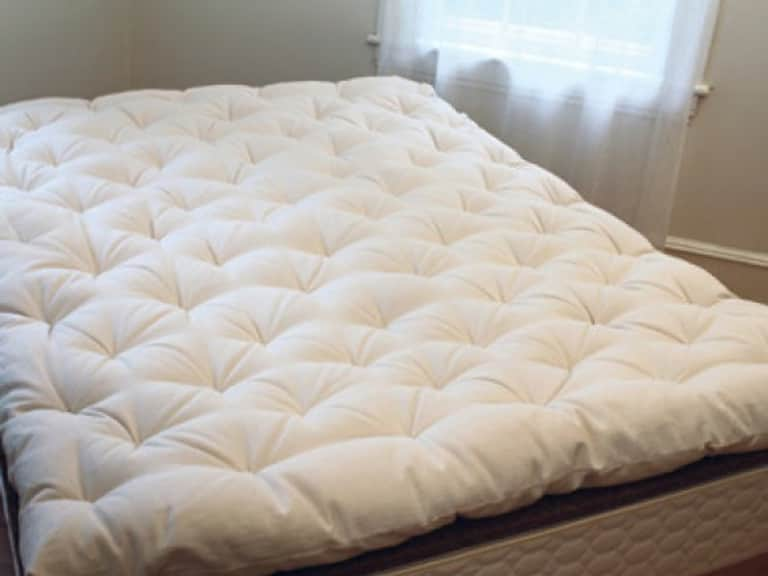
- Quilting and construction: Stitching helps keep fill distributed, but the pattern and spacing can affect texture and loft. A quilted surface may feel different from a more uniform, lightly secured fill.
- Attachment and pocket depth: Check whether the pad has a fitted skirt, corner straps or another fastening system. Confirm that its pocket depth can accommodate your mattress, including any existing topper.
- Care instructions: Washable wool and dry-clean-only wool are not interchangeable conveniences. Read the label before buying and consider whether the recommended care fits your household.
- Protection claims: If spill protection is essential, verify that the pad is specifically designed for it. A soft textile layer should not be treated as waterproof unless the manufacturer says so.
Certifications can help clarify certain material or production claims, but they do not answer every comfort question. A certification does not tell you whether the pad will feel too plush, fit your mattress securely or suit your preferred sleep temperature. Pair any label information with the practical specifications and care guidance.
Washable wool and other bedding constructions
One of the biggest differences between wool pads is what happens when it is time to clean them. Some are designed to be machine washable; others require spot cleaning or professional care. Washability can be convenient, but it depends on the exact fill, fabric and construction. Wool can shrink, felt or lose its shape if it is handled in a way the care label does not allow.
When a pad is labelled machine washable, follow the maker’s instructions closely. That may mean cool water, a gentle cycle and a mild detergent. Avoid adding bleach or fabric softener unless the care directions specifically permit it. Do not assume that tumble drying is safe: some products allow low heat, while others should be air-dried or laid flat. A large, waterlogged pad can also be heavy, so check that your washer can accommodate it without being overloaded.
Drying thoroughly matters. Before returning the pad to the bed, make sure it is dry through the middle as well as on the surface. Lingering dampness can make bedding unpleasant and may encourage odors. If the label requires dry cleaning, or if the pad is too large for home equipment, follow that guidance instead of experimenting with a wash cycle.
Other fillings bring their own trade-offs. Down-alternative fiber can offer a light, lofty feel and may be easy to wash, depending on its construction. Cotton fill may appeal to people who prefer familiar plant-based fibers, while synthetic or foam layers may feel smoother, denser or more contouring. These are broad tendencies, not guarantees: thickness, quilting and fabric can make as much difference as the material name on the label.
Wool stands apart for its blend of resilient cushioning, insulation and moisture absorption, but it is not necessarily the most practical option for everyone. A person who needs frequent, simple laundering may prioritize a pad with particularly straightforward care. Someone who prefers a very cool, sleek surface may find a thick wool layer less appealing. The best material is the one that fits both comfort preferences and real-life maintenance.
Getting the fit right
A thoughtfully made pad can still disappoint if it shifts or bunches overnight. Start by measuring the mattress, including its depth. Add the thickness of any topper that will remain underneath the pad, then compare the total with the product’s stated pocket depth. A fitted skirt that is too shallow may pull free; one that is excessively loose may not hold the pad neatly in place.
Check the size as well as the depth. Standard dimensions can vary slightly across manufacturers, and specialty mattress sizes may need a dedicated option. If the pad includes corner elastics or straps rather than a full fitted skirt, consider whether that attachment style will stay secure on your mattress.
After placing it on the bed, smooth the surface and check that the fill sits evenly. Follow any settling or airing instructions supplied by the maker. If the pad continues to slide, bunch or compress unevenly, the size or attachment system may not be right for the setup. A secure fit contributes to comfort, but it should not be so tight that it strains the fabric or pulls the corners out of shape.
Keeping a wool pad fresh between washes
Even washable bedding does not need to be laundered constantly. Regularly airing a wool pad, changing sheets and keeping the sleep space clean can help maintain freshness between deeper cleans. If the care label allows, airing the pad in a dry, well-ventilated area may help moisture dissipate. Avoid leaving it in conditions that could expose it to rain or prolonged dampness.
For a small spot, follow the manufacturer’s advice and use only the cleaning method permitted for that particular product. Blot rather than scrub if the instructions recommend spot treatment, and allow the area to dry completely. Strong detergents, hot water and vigorous agitation can be hard on wool fibers and may alter the pad’s shape or feel.
When not in use for a longer period, store the pad clean and fully dry in a breathable container or fabric cover, following the maker’s recommendations. Avoid compressing it tightly for extended periods if that could flatten the fill. Care is not just about keeping the surface looking good; it helps preserve the pad’s loft and usefulness over time.
Who may appreciate wool—and who may not
A wool mattress pad may appeal to sleepers who want a natural-fiber layer, gentle cushioning and a bed that feels comfortable across more than one season. It may also interest people who prefer a resilient, less slow-sinking surface and value moisture handling in their bedding. Those benefits are personal, and they depend on the pad’s precise construction.
Wool may be less appealing if you want a waterproof protector, dislike natural-fiber texture or need bedding that can be washed frequently with minimal care. It may also be too warm or too lofty for some sleepers, especially in a warm bedroom or when paired with heavy bedding. Anyone with a wool sensitivity should review materials carefully and consider their own response before adding wool to the bed.
Rather than choosing by material name alone, consider your specific comfort problem. Are you seeking a softer surface, a little more warmth, less clamminess, or protection from spills? A wool pad can be a thoughtful option for some of those goals, but it will not necessarily solve all of them. Matching the feature to the need is the simplest way to avoid disappointment.
A practical checklist for your bedding decision
Before settling on a wool mattress pad, ask yourself a few grounded questions:
- Do I want a subtle cushion, or a noticeably loftier surface?
- Am I mainly trying to adjust comfort, manage moisture, add warmth or protect the mattress?
- Will wool’s natural feel and care requirements work for my household?
- Does the cover fabric suit my preference for breathability and texture?
- Will the attachment style and pocket depth fit my mattress and any topper?
- Can I follow the product’s washing and drying instructions consistently?
These questions can turn a vague search for “better sleep” into a more useful comparison. They also help separate comfort features from marketing language. A clear listing should describe the fill, cover, dimensions, fit and care—not just promise a dreamy night.
The takeaway: comfort is in the construction
Wool mattress pads offer a distinctive mix of cushioning, insulation and moisture absorption. Those qualities may help a sleep surface feel more balanced as conditions change, especially when the fill is paired with a breathable cover and a secure fit. But no single material can promise the same experience for every sleeper, and a pad’s thickness, construction and care instructions make a real difference.
Take time to compare the details. Look at what the pad is made of, how much loft it adds, whether it fits your mattress and how it must be cleaned. Then consider the rest of your bedding and bedroom environment. A wool layer is most useful when it solves a specific comfort need and fits naturally into your routine—not simply because it sounds luxurious on a label.